
Blog / Getting Paid
What Is a Lien Waiver? 4 Types Contractors Should Know
What is a lien waiver? Learn the four types, conditional vs unconditional, when to sign each, and how lien waivers fit with your progress invoices.
If you've worked for a general contractor, a property manager, or on any sizable remodel, you've probably been asked to sign a lien waiver before getting paid. It can feel like being asked to sign away your rights, and if you sign the wrong one at the wrong time, that's exactly what can happen.
This guide explains what a lien waiver is, the four common types, when to sign each, and how lien waivers fit with your invoices.
This article is general information, not legal advice. Lien and lien waiver laws vary significantly by state. For your situation, talk to a construction attorney in your state.
First, what is a mechanics lien?
A mechanics lien (also called a construction lien) is a legal claim against a property by someone who improved it and wasn't paid: a contractor, subcontractor, supplier, or laborer. In most states, lien rights give unpaid contractors a way to secure payment, but they come with strict notice and filing deadlines. California's licensing board has a plain-English mechanics lien overview that shows how one state handles it.
What is a lien waiver?
A lien waiver (or lien release) is a document in which a contractor, sub, or supplier gives up some or all of its lien rights, usually in exchange for payment. Owners, lenders, and general contractors collect them to make sure that once they've paid, nobody can put a lien on the property for that same work.
In short: you get paid, they get a waiver. The trick is making sure the waiver doesn't take effect before the money is actually yours.
The four common types of lien waivers
Most lien waivers fall into a grid of two questions:
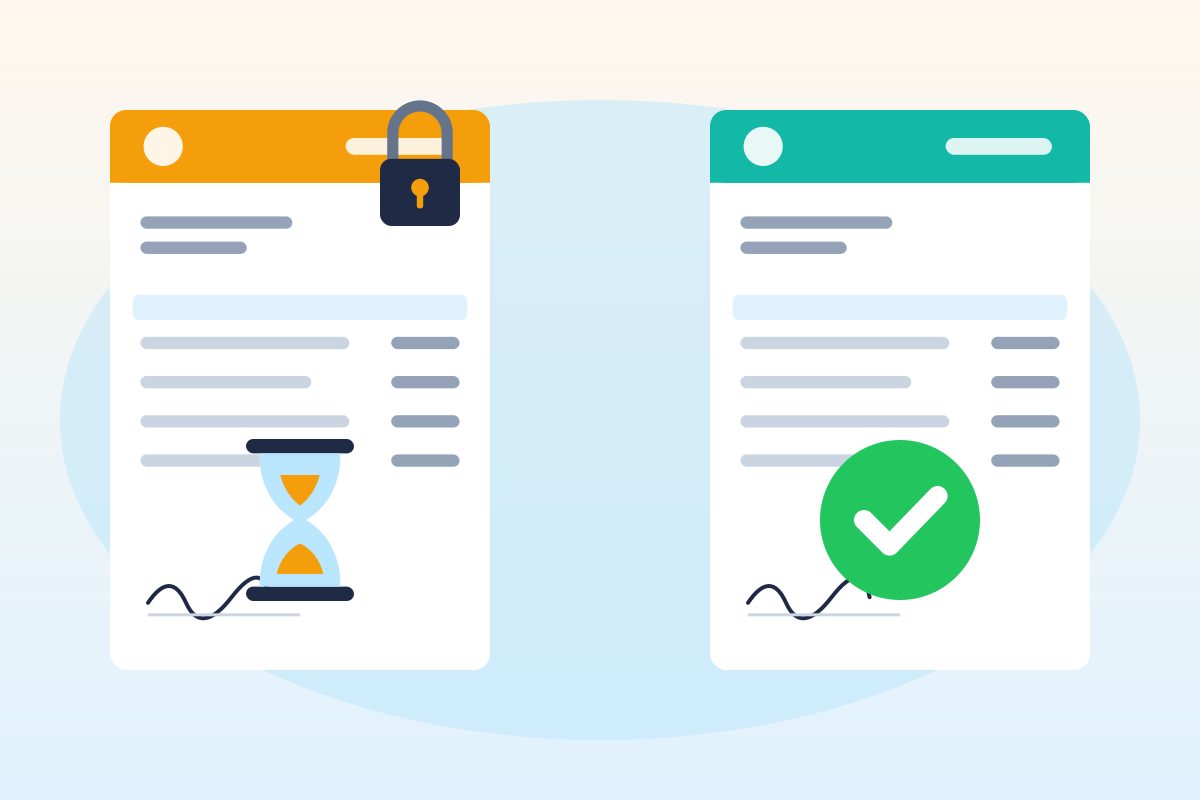
- Conditional or unconditional? Does the waiver only take effect once payment clears, or immediately?
- Progress (partial) or final? Does it cover payment for work through a certain date, or the whole job?
| Type | What it does | When to sign |
|---|---|---|
| Conditional progress waiver | Waives lien rights for work through a date, only if the stated payment is received | With a progress invoice, before payment |
| Unconditional progress waiver | Waives lien rights for work through a date, immediately | After you've received and confirmed that progress payment |
| Conditional final waiver | Waives all lien rights for the job, only if final payment is received | With the final invoice, before payment |
| Unconditional final waiver | Waives all lien rights for the job, immediately | Only after final payment has cleared |
The golden rule
Don't sign an unconditional waiver until the money has actually cleared your account. A check that bounces after you've signed an unconditional waiver can leave you with no lien rights for that amount.
Statutory lien waiver forms
Some states require specific statutory wording or forms for lien waivers to be valid, and a waiver that doesn't follow the required form may not be enforceable. States with statutory forms include California, Texas, Georgia, and Arizona, among others. Other states let the parties use their own forms. Always check your state's rules before signing a waiver someone else drafted, and watch for extra language that waives more than the payment covers, such as claims for unpaid change orders.
How lien waivers fit with your invoices
On jobs that use them, lien waivers travel alongside your invoices:
- Send your progress invoice with a conditional progress waiver for that amount.
- Receive payment and confirm it cleared.
- Provide an unconditional progress waiver for that payment, if requested.
- Repeat for each draw. See Progress Billing for Contractors.
- Send the final invoice with a conditional final waiver, including any retainage due (see Retainage in Construction).
- After final payment clears, provide the unconditional final waiver.
Make sure the amount, dates, and job on each waiver match the invoice exactly. Mismatches are a common reason payments get held up.
Waivers go smoother when invoices are accurate and on time. SnipInvoice drafts invoices from a spoken or typed description, flags anything it's unsure about instead of guessing, and lets you record each payment as it clears so you know exactly when it's safe to sign an unconditional waiver. See how it works.
Example: progress invoice with a conditional waiver
All names, numbers, and prices below are fictional examples, not pricing guidance or legal forms.
Example Electrical Contractors (fictional) · 77 Sample Rd, Anytown, USA · License #EXAMPLE-E100
Bill to: Example General Contracting (fictional) · Project: 1200 Demo Ave, Anytown, USA
Invoice #: 2026-118 · Date: June 30 · Period: work through June 30 · Terms: Net 30
| Line | Amount (example) |
|---|---|
| Subcontract amount | $42,000.00 |
| Work completed to date (55%) | $23,100.00 |
| Less retainage, 10% (per subcontract) | −$2,310.00 |
| Less previous payments | −$9,450.00 |
| Amount due this invoice | $11,340.00 |
Enclosed: conditional progress waiver for $11,340.00, for work through June 30, effective only upon receipt of payment in that amount.
Example only. Use your state's statutory form where required.
Lien waivers on residential jobs
Lien waivers aren't just for commercial projects. On a large home remodel or addition, the homeowner, or their construction lender, may ask the general contractor for waivers from every sub and major supplier before releasing each draw. That's reasonable: in many states, an unpaid sub can file a lien on the home even if the homeowner already paid the general contractor. Clear invoices that match each waiver make these requests painless. See our Remodeling Invoice Guide for how draws and waivers line up.
Lien waivers you receive
If you're the general contractor or you hire subs, collect waivers too. When you pay a subcontractor or supplier, get a waiver for that payment so the owner is protected and you can pass your own waiver up the chain. See Subcontractor Invoice Guide, plus our electrician and HVAC guides for the kinds of subs that often provide them.
Common lien waiver mistakes
- Signing an unconditional waiver before payment clears.
- Signing a final waiver when retainage or change orders are still unpaid.
- Waiving more than the payment covers, through broad "all claims" language.
- Using the wrong form in a state with statutory forms.
- Mismatched amounts or dates between the waiver and the invoice.
- Missing lien deadlines while waiting for payment. Waivers don't extend your notice deadlines.
FAQ
What is a lien waiver in construction?
A document in which a contractor, sub, or supplier gives up lien rights on a property, usually in exchange for payment.
What's the difference between conditional and unconditional lien waivers?
A conditional waiver only takes effect when the stated payment is received. An unconditional waiver takes effect immediately when signed, whether or not you've been paid.
When should I sign an unconditional lien waiver?
Only after the payment it covers has actually cleared your account.
Do homeowners need lien waivers?
Homeowners on larger projects often ask for them, especially from subs and suppliers, so they don't pay twice for the same work. Their lender may require them too.
Do I have to use a specific lien waiver form?
In some states, yes. Several states require statutory forms. Check your state's rules (not legal advice).
Does a lien waiver affect my invoice?
The waiver should match the invoice amount, job, and dates. On progress billing, each invoice typically pairs with a conditional waiver.
Get paid, then release
Lien waivers protect owners from double payment and protect you, as long as you sign the right type at the right time. Pair each invoice with a conditional waiver, record each payment as it clears, and only then sign unconditional. For accurate invoices that make the paperwork match, try SnipInvoice. Quotes are free on every plan.
Keep reading
Getting Paid
Retainage in Construction: How to Invoice & Get It Back
Retainage in construction explained: typical percentages, how to show retainage on progress invoices, how to bill its release, and how to get paid faster.