
Blog / Invoicing Guides
Remodeling Invoice Guide: Draws, Changes & Allowances
Remodeling invoice guide for general contractors: how to bill draws, show change orders and allowances, track payments, with a sample remodel invoice.

Remodeling and general contracting invoices are the hardest to get right. A kitchen or bathroom remodel can run for weeks, involve several subcontractors, include allowances for finishes the customer hasn't picked yet, and pick up a few change orders along the way. If your invoice doesn't connect all those pieces, the customer can't tell what they're paying for, and you end up explaining every number.
This guide covers how general contractors and remodelers can structure invoices that tie back to the contract, show change orders and allowances clearly, and keep payments moving.
Start with the contract, not the invoice
On a remodel, the invoice should mirror the agreement. Before the first invoice goes out, you should have:
- A written contract with scope, price, schedule, and payment terms. Many states require written contracts for home improvement work above a certain amount, and the FTC's avoiding home improvement scams guidance tells homeowners to ask for one even where it isn't required.
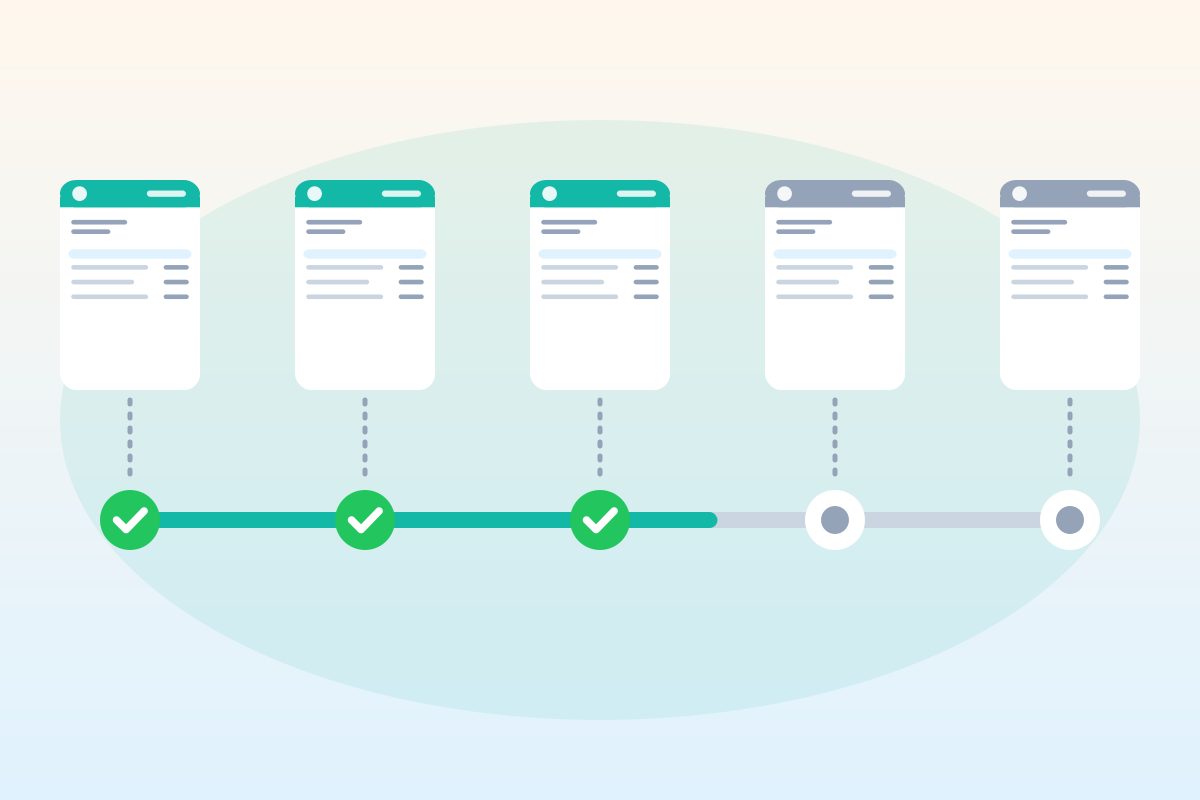
- A payment schedule tied to milestones (deposit, demo complete, rough-in, cabinets set, final).
- A schedule of values if the job is large: the contract price broken into line items, so each invoice can show percent complete.
- Allowances spelled out: "Tile allowance: $2,400 for material."
- A change order process agreed in writing. See How to Write a Change Order.
What to include on a remodeling invoice
- Business name, address, phone, email, and license number
- Customer name, billing address, and project address
- Invoice number, date, due date, and which payment milestone it's for ("Draw 3 of 5: cabinets and countertops installed")
- Original contract amount
- Approved change orders, each with number and amount
- Revised contract amount
- Work completed this period, by phase or schedule-of-values line
- Allowance reconciliation (actual vs. allowance)
- Previous payments received
- Amount due this invoice and remaining contract balance
- Retainage held, if your contract uses it (more common on commercial work). See Retainage in Construction.
- Payment terms, and any lien waiver you'll provide on payment
How to show change orders on an invoice
Change orders are where remodel invoices most often go wrong. The cleanest approach:
- Keep the original contract amount visible on every invoice.
- List each approved change order by number, short description, and amount (positive or negative).
- Show the revised contract total.
- Bill the change order work in the draw where it's completed, or when the contract says.
Never add unapproved changes to an invoice. If the customer hasn't signed, it's not a change order yet; it's a conversation.
How to reconcile allowances
Allowances let you price a job before the customer chooses finishes. On the invoice, show the math:
Tile allowance: $2,400.00 · Actual tile selected: $2,910.00 · Over allowance: $510.00
If they come in under, show a credit. Attach or reference the supplier receipts so the customer can verify the actual amount. Whether you add markup to overages should be stated in your contract.
Long remodels mean a lot of invoices. SnipInvoice can draft each one from a quick spoken update ("draw three, cabinets and counters done, change order two for the pantry, 1,850"), and flags anything it's unsure about instead of making up a number. You review it, then share the PDF from your own phone. See how it works.
Example remodeling progress invoice
All names, numbers, and prices below are fictional examples, not pricing guidance.
Example Remodeling LLC (fictional) · 400 Sample Ave, Anytown, USA · License #EXAMPLE-GC000
Bill to: Taylor Example · Project: Kitchen remodel, 22 Demo Dr, Anytown, USA
Invoice #: 6120 · Date: September 18 · Due: September 25 · Draw 3 of 5: cabinets and countertops installed
| Line | Amount (example) |
|---|---|
| Original contract amount | $48,000.00 |
| Change Order #1: add under-cabinet lighting (approved Aug 28) | $1,250.00 |
| Change Order #2: convert closet to pantry (approved Sep 4) | $1,850.00 |
| Change Order #3: delete backsplash niche (approved Sep 6) | −$400.00 |
| Revised contract amount | $50,700.00 |
| Draw 3 per payment schedule (25% of original contract) | $12,000.00 |
| Change Orders #1 and #2, completed this period | $3,100.00 |
| Change Order #3 credit | −$400.00 |
| Tile allowance overage (allowance $2,400, actual $2,910) | $510.00 |
| Amount due this invoice | $15,210.00 |
| Previous payments (deposit + draws 1–2) | $19,200.00 |
| Remaining after this invoice | $16,800.00 |
Example only. The remaining balance here excludes the allowance overage, which is billed in full this period.
Notes: Conditional lien waiver for this draw provided with invoice; unconditional waiver provided on receipt of payment.
How often to invoice on a remodel
Follow the payment schedule in the contract. Common patterns:
- Milestone draws: a fixed percentage when each phase is done (demo, rough-in, drywall, cabinets, final). Easy for homeowners to understand.
- Monthly progress billing: an invoice at the end of each month for the percent of each schedule-of-values line completed. More common on larger or commercial projects. See Progress Billing for Contractors.
- Time and materials: a weekly or biweekly invoice with hours and receipts, used when the scope is hard to pin down.
Whichever you use, send each invoice the day the milestone is reached. On a long job, a few days of delay on every draw adds up to weeks of floating your own payroll and materials.
Sales tax on remodeling
Remodeling sales tax rules differ by state, and some states treat repair and remodeling of residential property differently from new construction or commercial work. The Texas Comptroller's page on residential repair and remodeling is one example of how specific this can get. Read Sales Tax on Contractor Invoices for the basics.
Subcontractors and lien waivers
As the general contractor, you'll receive invoices from your subs and send invoices to the owner. Collecting lien waivers from subs when you pay them, and giving the owner waivers when they pay you, protects everyone. See What Is a Lien Waiver? and Subcontractor Invoice Guide. If your project includes electrical or HVAC work, our electrician and HVAC invoice guides show what those subs typically itemize.
This is general information, not legal or tax advice. Lien, contract, and tax rules vary by state.
Common remodeling invoice mistakes
- Dropping the original contract amount. The customer loses track of how the price got where it is.
- Billing unsigned changes. It's the fastest route to a dispute.
- Unreconciled allowances. Show actual vs. allowance every time.
- Billing ahead of progress. Draws should match work actually completed.
- Not tracking previous payments. Every invoice should show what's been paid and what's left.
FAQ
How should a general contractor invoice a remodel?
In draws tied to milestones in the contract. Each invoice should show the original contract, approved change orders, revised total, work billed this period, previous payments, and the remaining balance.
How do I show change orders on an invoice?
List each approved change order by number, description, and amount, then show the revised contract total. Bill the work when it's completed or as the contract says.
What is an allowance on a remodeling contract?
A budgeted amount for items the customer hasn't picked yet, like tile or fixtures. The invoice reconciles the actual cost against the allowance.
How much deposit can a remodeler take?
It depends on your state. Some states cap home improvement deposits. Check with your contractor licensing board (not legal advice).
Should I include lien waivers with my invoices?
Many contractors provide a conditional waiver with each draw invoice and an unconditional waiver once paid. Use your state's forms if it requires them.
Make every draw easy to approve
A remodel invoice that shows the contract, the changes, the allowances, and the payments on one page gets approved quickly. When you want each draw drafted in a couple of minutes, try SnipInvoice. The Unlimited plan is $19.99 a month for contractors with lots of invoices, and quotes are free on every plan.
Keep reading

Invoicing Guides
Appliance Repair Invoice Guide: Diagnostics & Parts
Appliance repair invoice guide: how to bill diagnostic fees, parts and labor, multi-visit repairs and warranties, with a sample appliance repair invoice.

Invoicing Guides
Pool Service Invoice Guide: Routes, Chemicals & Repairs
Pool service invoice guide: how to bill weekly pool maintenance, chemicals, repairs, openings and closings, with a sample pool service invoice and FAQs.

Invoicing Guides
Pest Control Invoice Guide: Treatments & Service Plans
Pest control invoice guide: what to include, application records, one-time treatments vs service plans, re-services, with a sample pest control invoice.