
Blog / Getting Paid
Progress Billing for Contractors: Deposits & Draws
Progress billing for contractors: how to structure deposits, milestone and percent-complete billing, schedules of values, and what each invoice shows.
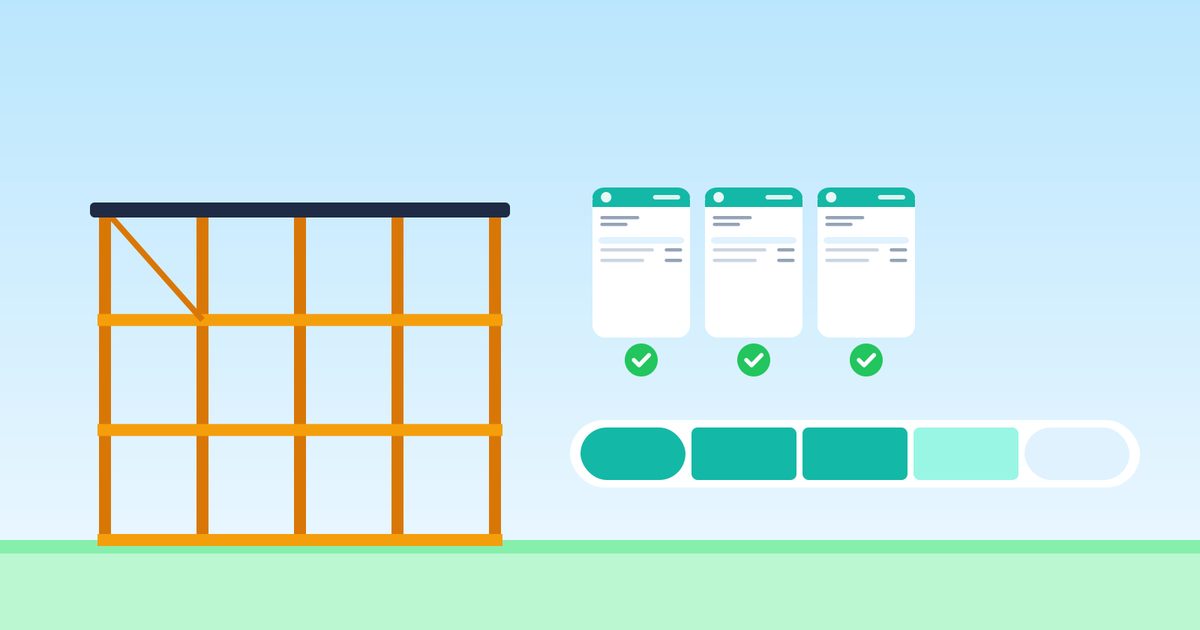
On a two-day repair, one invoice at the end is fine. On a six-week remodel or a commercial build-out, waiting until the end means you're paying for materials, payroll, and subs out of your own pocket for weeks. Progress billing fixes that by splitting the contract into stages and invoicing as each one is completed.
This guide covers deposits, milestone billing, percent-complete billing with a schedule of values, and what each progress invoice should show.
What is progress billing?
Progress billing (also called progress invoicing or draw billing) means invoicing a project in parts as work is completed, instead of one invoice at the end. Each invoice covers work done in that period and shows how it fits the whole contract.
It's common in construction, remodeling, roofing, landscaping installs, and any project where the work and costs are spread over time.
Three common ways to structure it
1. Deposit + final
The simplest: a deposit before work (often to cover materials) and the balance at completion. Good for jobs of a few days to a couple of weeks.
2. Milestone billing
The contract lists stages with a fixed amount or percentage for each. You invoice when each milestone is reached.
Deposit 10% · Demo complete 20% · Rough-in passed inspection 25% · Cabinets and counters installed 25% · Final completion 20%
Homeowners understand this easily, and each milestone is a clear, visible event.
3. Percent-complete billing with a schedule of values
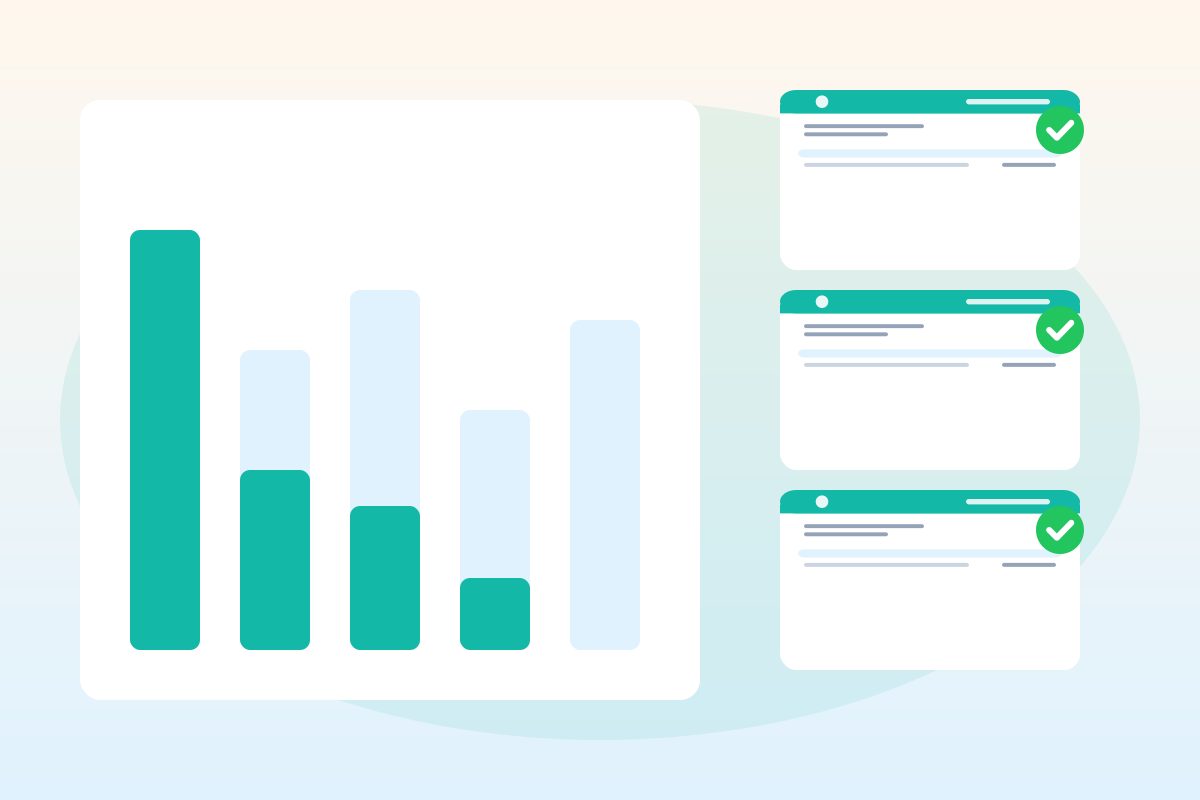
Common on commercial and larger jobs. The contract price is broken into line items (a schedule of values). Each billing period, usually monthly, you invoice the percent of each line completed since the last invoice. Many commercial projects use the AIA G702 and G703 pay application forms, or something similar, for this.
Deposits: how much and when
A deposit protects you from buying materials for a customer who backs out. Common practice is to tie the deposit to materials and mobilization costs rather than profit.
But deposits are regulated in some states. Some states cap down payments on home improvement contracts. California, for example, generally limits a home improvement down payment to $1,000 or 10% of the contract price, whichever is less. Other states have different rules, and some have none. Check with your state contractor licensing board before setting a deposit policy. The FTC's avoiding home improvement scams guidance also warns homeowners about large upfront payments, so a reasonable deposit builds trust.
This article is general information, not legal advice. Deposit and payment rules vary by state; check your licensing board or an attorney.
What every progress invoice should show
- Your business and license details, customer, and project address
- Invoice number, date, due date, and which draw or period it covers
- Original contract amount
- Approved change orders and the revised contract amount (see How to Write a Change Order)
- Work completed to date (by milestone or schedule-of-values line)
- Less previous billings
- Amount due this invoice
- Retainage held, if any (see Retainage in Construction)
- Balance remaining on the contract
- Payment terms and any lien waiver provided (see What Is a Lien Waiver?)
Every draw needs the same running totals. SnipInvoice records each payment you receive (cash, check, bank transfer, or card taken outside the app), and shows partly paid and overdue invoices at a glance, so you always know what's been paid and what's left. Describe the draw out loud and review the draft; anything unclear is flagged, never guessed. See how it works.
Example: percent-complete progress invoice
All names, numbers, and prices below are fictional examples, not pricing guidance.
Example Builders LLC (fictional) · 2 Sample Plaza, Anytown, USA · License #EXAMPLE-B000
Bill to: Example Dental Office (fictional) · Project: Tenant improvement, Suite 110, 500 Demo Blvd
Invoice #: 9006 · Period: through March 31 · Date: March 31 · Terms: Net 30 · Due: April 30
| Schedule of values line | Scheduled value | % complete to date | Completed to date (example) |
|---|---|---|---|
| General conditions | $6,000.00 | 50% | $3,000.00 |
| Demolition | $4,000.00 | 100% | $4,000.00 |
| Framing and drywall | $18,000.00 | 60% | $10,800.00 |
| Electrical (sub) | $14,000.00 | 40% | $5,600.00 |
| Plumbing (sub) | $10,000.00 | 30% | $3,000.00 |
| Finishes | $13,000.00 | 0% | $0.00 |
| Totals | $65,000.00 | $26,400.00 |
| Summary | Amount (example) |
|---|---|
| Original contract | $65,000.00 |
| Approved change orders | $0.00 |
| Revised contract | $65,000.00 |
| Completed to date | $26,400.00 |
| Less retainage, 5% (as specified in contract) | −$1,320.00 |
| Earned less retainage | $25,080.00 |
| Less previous billings (net of retainage) | −$11,400.00 |
| Amount due this invoice | $13,680.00 |
| Balance to finish, including retainage | $39,920.00 |
Example only. Retainage rates and rules depend on your contract and state.
A residential milestone schedule, step by step
For a fictional $24,000 bathroom remodel, a simple milestone plan might look like this (example only, and subject to any deposit limits in your state):
- Deposit at signing: a modest amount tied to ordering materials
- Demo and rough plumbing complete: about a quarter of the contract
- Tile and waterproofing complete: about a third
- Fixtures, vanity, and trim installed: most of the remainder
- Final walkthrough and punch list complete: the final payment
Each invoice states the milestone, the amount, what's been paid, and what's left. Because the milestones are visible events, the homeowner can see the progress with their own eyes before paying.
What if the customer disputes progress?
If an owner thinks a line is less complete than you billed, walk the job together, agree on a revised percentage, and reissue the invoice for the agreed amount. Arguing over a few percentage points usually costs more than it gains. Photos and inspection results settle most disagreements quickly.
Tips for smoother progress billing
- Agree on the billing method in the contract. Milestones or percent-complete, the billing date, and payment terms.
- Bill on schedule. If you bill on the 25th each month, do it every month.
- Don't overbill. Billing ahead of actual progress damages trust and may violate your contract.
- Back up percentages. Photos and inspection sign-offs help the owner approve quickly.
- Track every payment. Partial payments and retainage get confusing fast without a clear record. The IRS recordkeeping guide explains what to keep.
Progress billing shows up across trades. Our remodeling and roofing guides show milestone billing in practice, and the HVAC guide covers equipment installs where a deposit is common.
FAQ
What is progress billing in construction?
Invoicing a project in stages as work is completed, either by milestones or by percent complete against a schedule of values.
What is a schedule of values?
A breakdown of the contract price into line items. Each progress invoice shows how much of each line is complete.
How much deposit can a contractor take?
It depends on the state. Some states cap home improvement deposits; California, for example, generally limits it to $1,000 or 10%, whichever is less. Check your state's rules.
How often should I send progress invoices?
As the contract says: at each milestone, or on a set date each month for percent-complete billing.
What is the difference between progress billing and milestone billing?
Milestone billing is a type of progress billing that invoices fixed amounts at defined stages. Percent-complete billing invoices based on how much of each line is done.
What are AIA G702 and G703?
Standard pay application forms many commercial projects use: G702 summarizes the payment application, and G703 is the continuation sheet with the schedule of values.
Keep cash moving through the whole project
Progress billing means you're not financing your customer's project. Set the structure in the contract, bill on schedule, and show running totals on every invoice. When you want each draw drafted fast and every payment tracked, try SnipInvoice. Plans start free with 3 invoices a month.
Keep reading
Getting Paid
Retainage in Construction: How to Invoice & Get It Back
Retainage in construction explained: typical percentages, how to show retainage on progress invoices, how to bill its release, and how to get paid faster.
Getting Paid
What Is a Lien Waiver? 4 Types Contractors Should Know
What is a lien waiver? Learn the four types, conditional vs unconditional, when to sign each, and how lien waivers fit with your progress invoices.