
Blog / Getting Paid
How to Get Paid Faster: 11 Invoicing Tips for Contractors
Practical ways contractors can get paid faster: clear payment terms, deposits, progress billing, late fees done right and follow-ups that work.
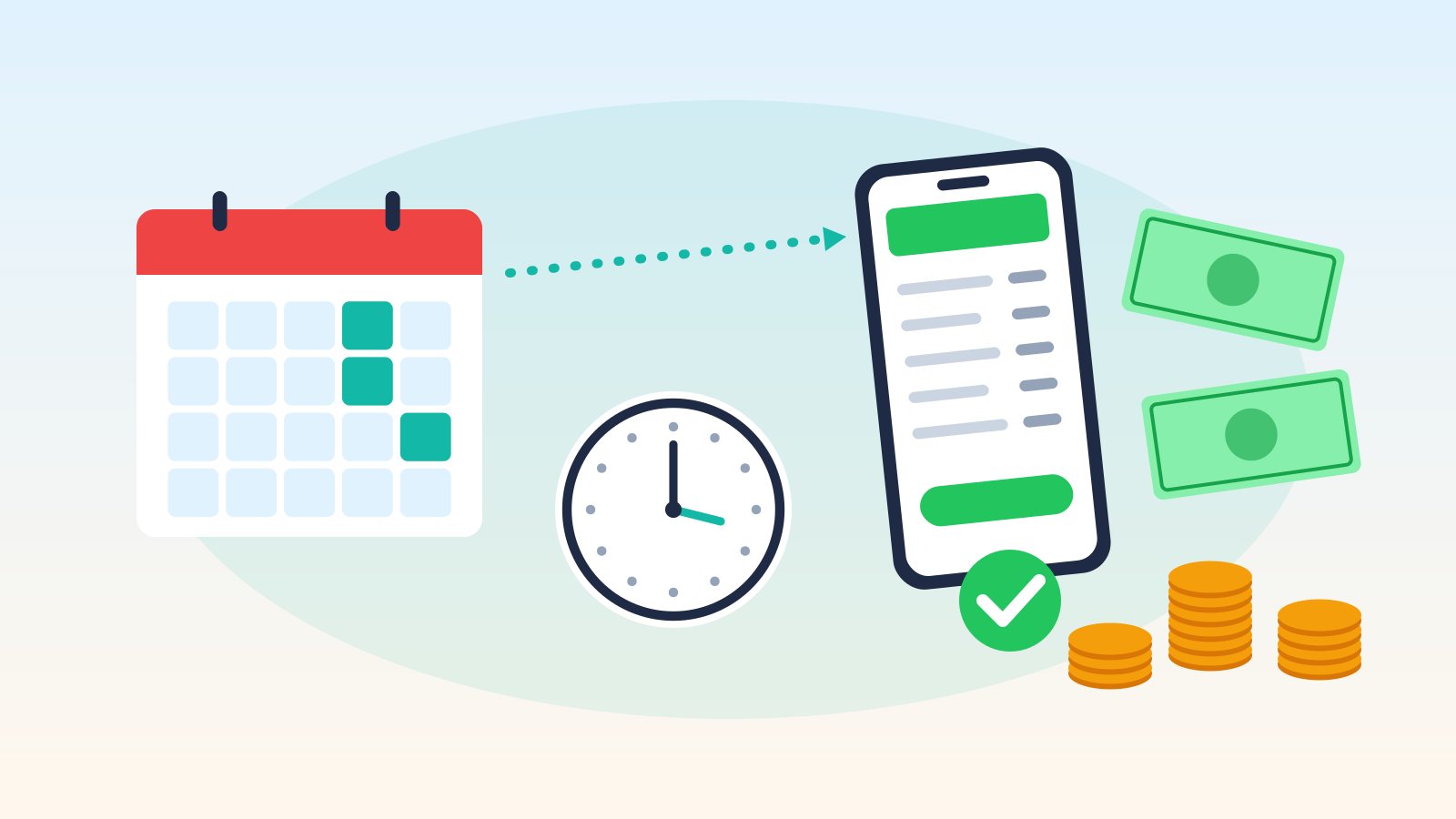
Doing the work is only half the job. Getting paid for it, on time, is what keeps the truck fueled and payroll covered. Late payments are one of the most common cash-flow headaches for small trade businesses, and most of the fixes are in your control.
Here are practical, US-focused tips to help contractors and service businesses get paid faster: setting payment terms, taking deposits, using progress billing, adding late fees the right way, and following up without burning the relationship.
Why contractors get paid late
Before the fixes, it helps to know the usual causes:
- The invoice went out days or weeks after the job.
- The due date was vague ("Net 30" with no date) or missing.
- The invoice was confusing, so the customer set it aside.
- A commercial customer needed a PO number or W-9 that wasn't provided.
- Paying was inconvenient (only checks, mailed to an address the customer didn't have).
- Nobody followed up.
Each tip below targets one of these.
1. Agree on payment terms before you start
Payment problems are much easier to prevent than to fix. Put your terms in the estimate or contract, and get the customer's signature or written approval before work begins:
- When payment is due
- How much deposit (if any) is required
- Progress payment milestones for larger jobs
- Accepted payment methods
- Late-fee terms, if you use them
The SBA recommends tracking accounts receivable as part of basic financial management (SBA: Manage your finances). Clear terms make that tracking meaningful.
2. Choose payment terms that fit the job
| Term | What it means | Typically used for |
|---|---|---|
| Due on receipt | Pay when the invoice arrives | Service calls, small residential jobs |
| Net 7 / Net 15 | Pay within 7 or 15 days | Repeat residential, small commercial |
| Net 30 | Pay within 30 days | Commercial and property-management customers |
| Deposit + balance on completion | Part up front, rest when done | Mid-size jobs with material costs |
| Progress payments | Paid at defined milestones | Remodels and multi-week projects |
Shorter terms generally mean faster payment, but commercial customers often have fixed payment cycles. Ask about them up front rather than being surprised.
3. Send the invoice the same day
Every day between finishing the job and sending the invoice is a day added to how long you wait for your money. Same-day invoicing also means fewer forgotten parts and fewer errors, because the job is fresh in your mind. If you can, send it before you leave the driveway.
4. Make the invoice impossible to misunderstand
Customers delay paying invoices they don't understand. Include:
- Itemized labor and materials, not "misc."
- The actual due date, printed clearly
- The balance due, after any deposit
- How to pay, and who to make checks out to
- The customer's PO number for commercial jobs
5. Take a deposit where it's allowed
Deposits cover your material costs and confirm the customer is serious. But deposit rules vary by state, especially for residential home improvement work.
In California, for example, the down payment on a home improvement contract can't exceed $1,000 or 10% of the contract price, whichever is less, and a contractor generally can't collect payment for work not yet done or materials not yet delivered beyond that down payment (CSLB: Home improvement contracts). Other states have their own rules, and some have none. Check your state's contractor licensing board before you set a deposit policy.
6. Use progress billing on bigger jobs
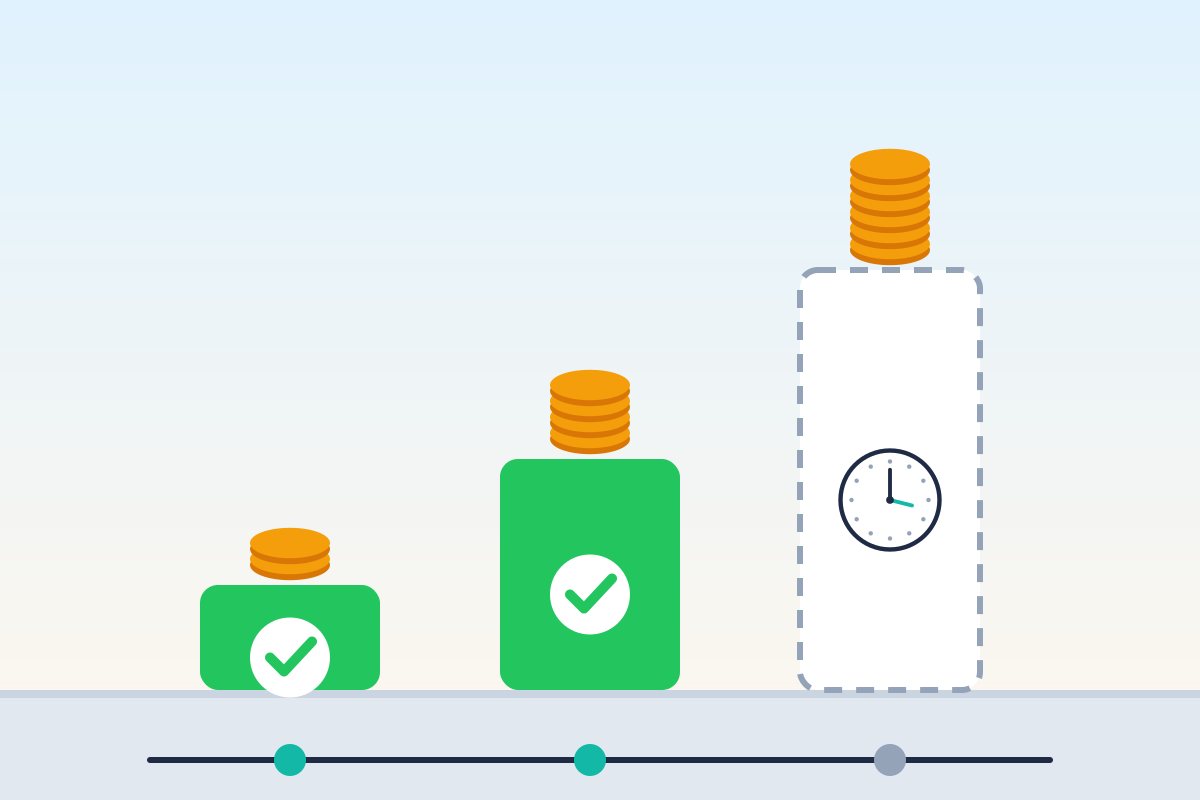
On a multi-week job, waiting until the end to bill puts all the risk on you. Progress billing ties payments to milestones the customer can see:
- Deposit at signing (within any state limit)
- Payment after rough-in or demolition
- Payment after a major phase, such as fixtures set or equipment installed
- Final payment at completion and walkthrough
Describe each milestone clearly in the contract so there's no debate about whether it has been reached. Where your state ties payments to work actually performed, as California does, make sure each payment matches the value of work completed.
7. Make paying easy
Every extra step costs you days. Accept the methods your customers actually use: check, bank transfer (ACH), card, or cash. Print the details on the invoice. If you accept card payments, factor processing fees into your pricing. Card-surcharge rules vary by state and by card network, so check them before adding a surcharge.
8. Set late fees the right way
A late fee can encourage on-time payment, but only if it's done properly:
- Agree on it in advance. Put the late fee in your estimate or contract, not just on the invoice. Adding a surprise fee after the fact is hard to enforce and harms the relationship.
- Stay within state limits. States regulate interest and late charges differently, and some cap them. Check your state's rules, or ask an attorney, before choosing a rate or flat fee.
- Be consistent. Apply it the same way to everyone, and print the terms on every invoice.
Many contractors use the late fee mostly as a reason to start a conversation, and waive it for a good customer who pays promptly once reminded.
9. Follow up on a schedule
Most late invoices get paid after a polite reminder. Build a simple routine:
- A few days before the due date: a friendly heads-up with the invoice attached.
- On the due date: "Just a reminder that invoice #0142 is due today."
- 7 days late: a firmer note with the balance and how to pay.
- 30 days late: a phone call, then a written notice referencing your agreed terms.
Keep every message short and polite, and always include the invoice number and amount.
10. Watch your unpaid invoices by age
Look at your open invoices grouped by how overdue they are: current, 1–30 days, 31–60 days, and 60+ days. The older an invoice gets, the harder it can be to collect. A weekly five-minute review shows you who needs a call today.
11. Know your options before an invoice goes bad
If a customer won't pay, you may have more options than you think, but the rules are strict and vary by state:
- Mechanic's liens. Most states let unpaid contractors, subcontractors and suppliers place a lien on the property they improved, but deadlines and notice requirements are strict. In California, for example, subcontractors and suppliers generally must serve a preliminary notice within 20 days of first furnishing work or materials to protect their full lien rights (CSLB: How to prevent a mechanics lien). Learn your state's rules before you need them.
- Small claims court. Every state has one, with its own dollar limits and procedures.
- Collections or an attorney for larger amounts.
This isn't legal advice. If a large invoice is at risk, talk to a construction attorney in your state early, because lien deadlines can pass quickly.
Keep good records of what you're owed
Keep every invoice, payment record and reminder. Besides helping with collections, invoices and deposit records are part of the documentation the IRS expects for your business income (IRS: What kind of records should I keep).
SnipInvoice is built to help with the parts above that slow most trades down. You can draft an invoice by describing the job, share the PDF from your phone right away, record cash, check, bank transfer or card payments you took outside the app (including partial payments), and see unpaid invoices grouped by age. When a reminder is needed, you send it from your own phone; nothing goes out by itself.
FAQ
What are good payment terms for contractors?
"Due on receipt" works well for service calls and small residential jobs. Larger jobs often use a deposit plus progress payments. Commercial customers commonly expect Net 30. Agree on terms in writing before work starts.
Can I charge a deposit before starting work?
In many states, yes, but some states limit deposits on residential home improvement work. California, for example, caps the down payment at $1,000 or 10% of the contract price, whichever is less. Check your state's contractor licensing board.
Can I add a late fee to an invoice?
Generally, only if the customer agreed to it in advance, and within your state's legal limits. Put late-fee terms in the contract and on every invoice.
How soon should I follow up on an unpaid invoice?
Send a friendly reminder just before or on the due date, then follow up at regular intervals, such as 7 and 30 days late, with a phone call if needed.
What if a customer refuses to pay?
Options include a mechanic's lien, small claims court, collections or an attorney. Lien deadlines are strict and vary by state, so act early and get legal advice for large amounts.
Send the invoice before you leave the job. SnipInvoice is launching soon on iOS and Android. See how it works.
Keep reading
Getting Paid
Retainage in Construction: How to Invoice & Get It Back
Retainage in construction explained: typical percentages, how to show retainage on progress invoices, how to bill its release, and how to get paid faster.
Getting Paid
What Is a Lien Waiver? 4 Types Contractors Should Know
What is a lien waiver? Learn the four types, conditional vs unconditional, when to sign each, and how lien waivers fit with your progress invoices.