
Blog / Invoicing Guides
Estimate vs Quote vs Invoice: A Contractor's Guide
Estimate vs quote vs invoice: what each one means for contractors, when to send it, the state rules that matter and how to go from quote to invoice.
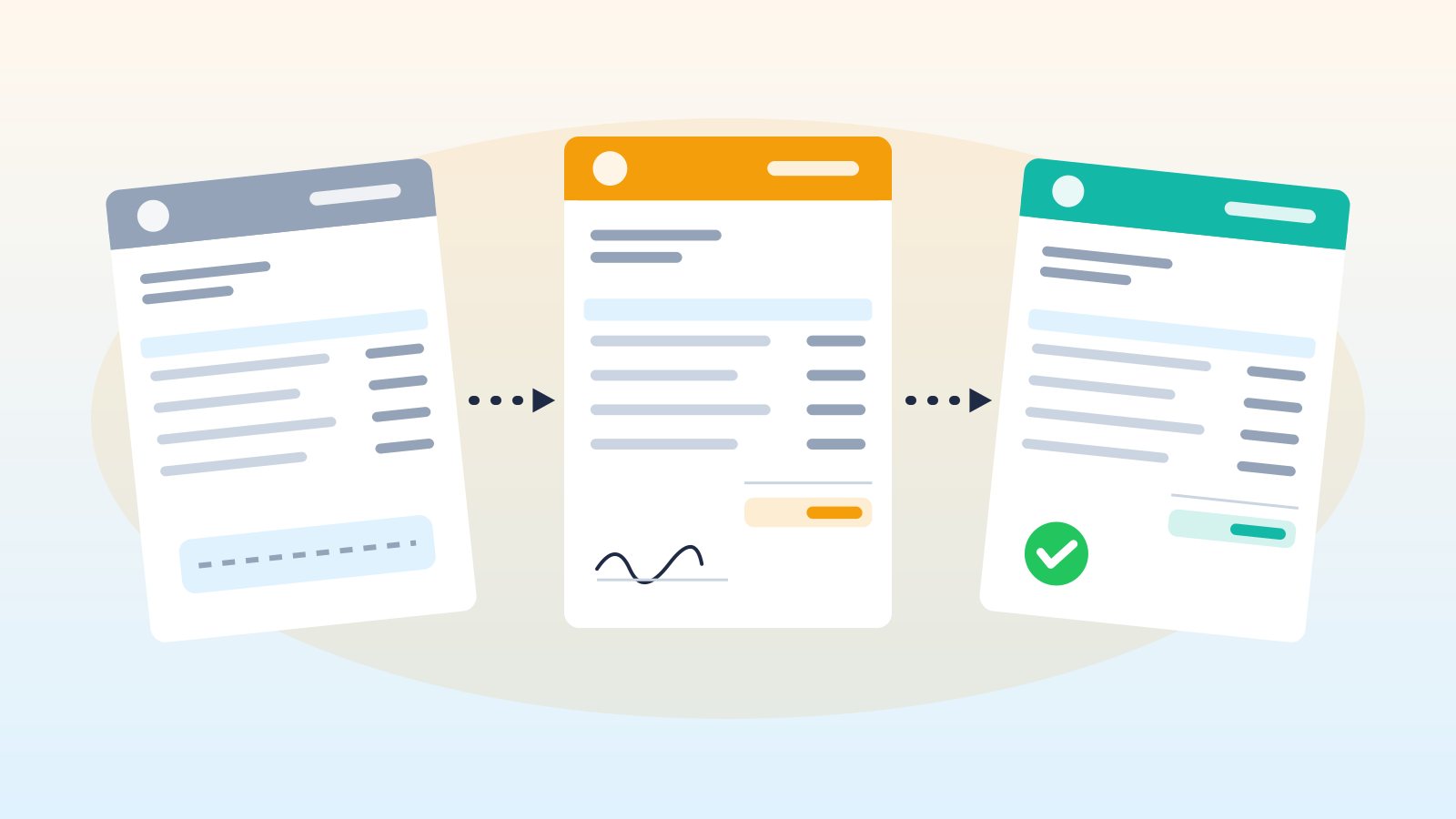
Customers use the words "estimate," "quote" and "invoice" interchangeably. Contractors shouldn't. Each document does a different job, sets different expectations about price, and shows up at a different point in the life of a job. Mixing them up is one of the easiest ways to end up arguing about money after the work is done.
Here's a plain-English breakdown of estimate vs. quote vs. invoice for US contractors and service businesses, with a side-by-side table, when to use each, and how to move cleanly from one to the next.
The short version
- Estimate: your best educated guess at what a job will cost. It can change.
- Quote: a fixed price for a defined scope of work, usually valid for a set period. Once accepted, it's what you've committed to charge for that scope.
- Invoice: a request for payment for work you've done or materials you've supplied.
Estimates and quotes come before the work. Invoices come after (or at agreed milestones during) the work.
Estimate vs. quote vs. invoice at a glance
| Estimate | Quote | Invoice | |
|---|---|---|---|
| Purpose | Give a likely price range | Offer a firm price | Request payment |
| When | Before work, often early | Before work, once scope is clear | After work or at milestones |
| Price can change? | Yes, within reason and with notice | Not for the quoted scope | Should match the agreed price plus approved changes |
| Typical detail | Rough labor and materials | Detailed scope, exclusions, expiry date | Itemized lines, tax, total, due date |
| Customer action | Decide whether to move forward | Accept or decline | Pay |
What is an estimate?
An estimate is an approximate price based on what you know before you start. It's useful when the job has unknowns, like a leak behind a wall, an old electrical panel, or a lawn you haven't walked yet.
A good estimate:
- Describes the work as you understand it
- Breaks out labor and materials where you can
- States clearly that it's an estimate, and what could change the price
- Says how you'll handle overruns (for example, "We'll contact you for approval before exceeding this estimate by more than 10%")
Customers generally treat an estimate as a ballpark, but large surprises still damage trust. If you find something that changes the job, stop and get approval before you continue.
What is a quote?
A quote is a firm offer: "We'll do this specific work for this price." Many contractors also call it a bid or proposal. Once the customer accepts, the quoted price applies to the quoted scope.
A strong quote includes:
- A detailed scope of work, including what's not included (patching drywall, painting, permits, haul-away)
- The total price, with line items if helpful
- An expiration date ("Valid for 30 days"), since material prices change
- Payment terms, including any deposit and progress payments
- A place for the customer to accept, such as a signature or written approval
Because a quote locks in a price, scope creep is the biggest risk. If the customer asks for more, write it up as a change order instead of quietly absorbing it.
What is an invoice?
The invoice is the bill. It turns completed work into a payment request, and it becomes part of your financial records. The IRS lists invoices among the supporting documents for a business's gross receipts (IRS: What kind of records should I keep).
Your invoice should:
- Reference the accepted quote or estimate
- List the work and materials, including any approved changes as separate lines
- Show sales tax where it applies under your state's rules
- Subtract any deposit already paid
- Show the balance and the actual due date
If the invoice matches what the customer accepted, it usually gets paid without questions. If it doesn't, expect a phone call.

Which one should you send?
Send an estimate when:
- You can't see the full scope yet (hidden damage, diagnosis needed)
- The customer just wants a rough number to decide whether to proceed
- The job is billed time-and-materials
Send a quote when:
- The scope is clear and you can price it confidently
- The customer is comparing contractors
- The job is large enough that both sides want a firm number
Send an invoice when:
- The work (or a milestone) is complete
- A deposit is due under the agreed terms
Many jobs use all three: an estimate on the first call, a quote once you've inspected, and an invoice when the work is done.
State rules that affect estimates and quotes
The legal weight of these documents depends on your state, your trade and the wording you use. A few examples worth knowing:
- Written contracts for home improvement. In California, a written contract is required for home improvement projects over $500, and any change in price or scope must be made through a written change order signed by both sides (CSLB). Other states have their own thresholds and requirements.
- Deposit limits. California also caps the down payment on a home improvement contract at $1,000 or 10% of the contract price, whichever is less (same source).
- The FTC Cooling-Off Rule. If a sale of $25 or more is made in the customer's home, the federal Cooling-Off Rule can give the buyer until midnight of the third business day to cancel, and requires the seller to give notice of that right. There are exceptions, including some emergency situations and sales negotiated at your permanent place of business (FTC: Cooling-Off Rule). Some states add their own cancellation rights.
Rules vary by state, so check with your state contractor licensing board or an attorney about what your estimates, quotes and contracts must include. This article isn't legal advice.
Moving from quote to invoice without mistakes
The handoff from an accepted quote to a final invoice is where errors creep in. A simple process:
- Start the invoice from the accepted quote, not from memory. Copy the same line items and prices.
- Add change orders as separate lines, each referencing the customer's approval.
- Remove anything that wasn't done, and note it if it was dropped by agreement.
- Apply tax line by line according to your state's rules.
- Subtract the deposit and any progress payments already received.
- Keep the quote and invoice numbers separate. Using different numbering sequences for quotes and invoices keeps your invoice sequence clean, even when some quotes are declined.
Common mistakes
- Calling an estimate a quote (or vice versa), which creates the wrong expectations about price.
- No expiration date on quotes, leaving you stuck with last year's material prices.
- No exclusions, so the customer assumes painting, patching or permits are included.
- Verbal change orders that become disputes at invoice time.
- Invoices that don't match the quote, without explanation.
SnipInvoice keeps quotes and invoices separate. Quotes are free on every plan, your customer can accept a quote from a link without creating an account, quotes are valid for 30 days by default, and an accepted quote can be converted into an invoice with one tap. Quotes use their own number sequence, so a declined quote never leaves a gap in your invoice numbers.
FAQ
Is an estimate legally binding?
Generally, an estimate is understood as an approximation rather than a fixed price, but the details depend on your state, your trade and the wording you use. If the price is likely to change, say so in writing and get approval before going significantly over.
Is a quote the same as a bid?
In everyday use, mostly yes. Both are firm price offers for a defined scope. "Bid" is common on commercial and competitive jobs, while "quote" is common for residential work.
How long should a quote be valid?
Many contractors use 15 to 30 days, because material and labor costs change. Print the expiration date on the quote.
Can I charge more than my quote?
Only for work outside the quoted scope, and ideally only with a written change order the customer approved before the extra work began. Some states, such as California, require written change orders on home improvement contracts.
Do I still need an invoice if the customer accepted a quote?
Yes. The quote is the agreement; the invoice is the request for payment and your record of the income.
Quote it, win it, invoice it, all from your phone. SnipInvoice is launching soon on iOS and Android. Read the FAQ.
Keep reading
Invoicing Guides
Appliance Repair Invoice Guide: Diagnostics & Parts
Appliance repair invoice guide: how to bill diagnostic fees, parts and labor, multi-visit repairs and warranties, with a sample appliance repair invoice.

Invoicing Guides
Pool Service Invoice Guide: Routes, Chemicals & Repairs
Pool service invoice guide: how to bill weekly pool maintenance, chemicals, repairs, openings and closings, with a sample pool service invoice and FAQs.

Invoicing Guides
Pest Control Invoice Guide: Treatments & Service Plans
Pest control invoice guide: what to include, application records, one-time treatments vs service plans, re-services, with a sample pest control invoice.